You want a condo investment that works as hard as you do. Marina del Rey checks a lot of boxes: waterfront lifestyle, proximity to Silicon Beach employers, and steady rental demand. The key is buying with clear eyes on building type, HOA and land-lease details, and local rental rules that can make or break your numbers. In this guide, you’ll learn how to underwrite the right buildings, what to expect from rents and expenses, and how to navigate short-term and long-term rental regulations. Let’s dive in.
Why Marina del Rey appeals to investors
Marina del Rey’s condo market is small, unique, and driven by building-specific dynamics. You see everything from 1970s towers to modern, full-service high-rises and townhome-style communities. Prices vary widely across these segments, so building-level comps matter more than a single neighborhood median.
Rental demand is consistent thanks to coastal lifestyle benefits and nearby employers. Platform research shows median asking rents around the high thousands, with roughly $3,100 for many 1-bedrooms and about $4,000 for many 2-bedrooms. You can use current local ask-rent data as a starting point when you underwrite, then adjust for concessions and seasonality. For a current snapshot, review the neighborhood’s asking rent trends in the latest Zumper rental research for Marina del Rey.
The practical takeaway: Marina del Rey can pencil for long-term rentals if you buy the right building at the right basis and model HOA dues, property taxes, and any ground lease payments with care.
Know your building types
Not all Marina del Rey condos are created equal. Your cash flow can swing based on the community you choose and how it is structured.
Older high-rises and leasehold communities
Several large 1970s–1980s tower communities sit on County-controlled land with ground leases. Lease terms, resets, and expiration timelines can shape value, financing, and resale. Before you buy, confirm whether a property is fee simple or subject to a land lease. The County publishes parcel lease files and expiration details, which you can review through the LA County Beaches & Harbors lease agreements portal.
Some leasehold buildings show lower price per square foot compared to newer towers, but ground rent and the lease timeline need to be treated as recurring costs and potential constraints.
Full-service luxury towers
Newer, full-service towers typically command higher prices and higher HOA dues. In return, you get strong amenities and bundled services that can appeal to long-term tenants, including concierge, fitness facilities, and often building insurance coverage within HOA dues. These buildings can support higher rents; just be sure you account for HOA dues in your net yield.
Townhomes and patio homes
Townhome-style communities can function more like fee-simple Westside product, sometimes with lower monthly HOA dues and private entries or patios. These features can boost rental appeal and reduce monthly operating costs, but acquisition prices can run higher on a per-unit basis. Underwrite at the building level and compare actual HOA inclusions.
Boat slips and marina access
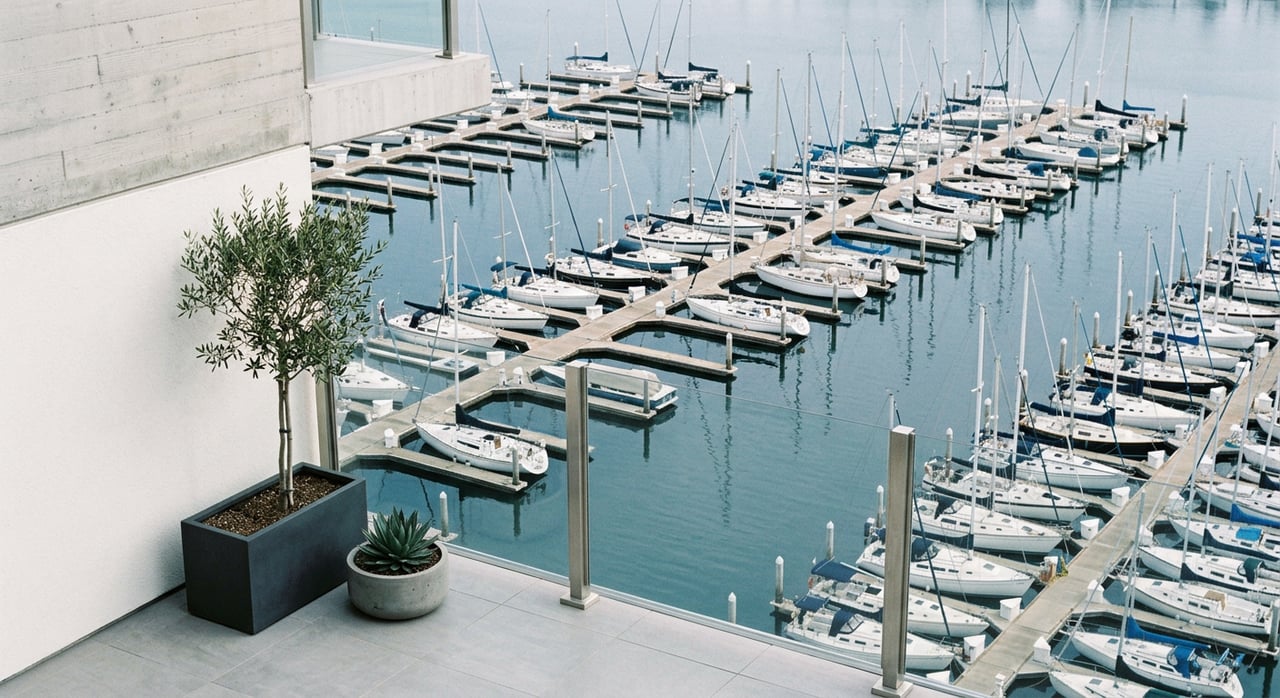
Waterfront value is often tied to slip access. Arrangements vary by building: deeded slips, HOA-administered slips, or County-managed permits. If a slip influences your buy decision or rental strategy, get it in writing. For a helpful primer on Marina del Rey land-lease areas and how slip access can be structured, review this overview of land-lease and slip considerations in Marina del Rey.
HOA dues and what they cover
HOA fees in Marina del Rey span a wide range, from a few hundred dollars per month in smaller communities to well over $1,000 per month in full-service towers. What you get for that fee matters: building insurance, earthquake coverage, water and trash, cable or internet, amenities, and on-site staffing. Ask for the last three years of budgets and the reserve study to assess reserve health and special assessment risk. Strong reserves can protect your cash flow and help with financing eligibility.
Short-term vs long-term: rules you must know
Short-term rental rules in Marina del Rey are complex. Unincorporated Los Angeles County adopted an STR ordinance with registration and operational standards, but the County’s coastal areas, including Marina del Rey, are excluded until coastal policies are reviewed by the California Coastal Commission. Do not assume you can operate an STR without written confirmation. Start by reviewing the County’s short-term rental guidance for unincorporated areas and verify how coastal review may affect a specific property.
HOAs add another layer. California updated state law to prevent blanket bans on most rentals, but communities can still prohibit rentals of 30 days or less and cap longer-term rentals up to 25 percent. Always read the CC&Rs and any amendments to confirm what your building allows. For a concise legal summary, see this overview of California HOA rental restrictions after AB 3182.
If short-term rentals are allowed, remember taxes. The County administers a 12 percent Transient Occupancy Tax on transient stays in unincorporated areas, and hosts are responsible for registration and remittance as required. Factor that into your revenue model. Learn more from the County’s Transient Occupancy Tax page.
The safe path for most investors in Marina del Rey is long-term rental underwriting. It is legally stable, supports quality tenant demand, and avoids STR regulatory risk and turnover costs.
Underwrite like a pro
Focus on building-specific facts and be conservative where you lack documents.
Key inputs to collect:
- Purchase price and true usable square footage based on same-building comps.
- Market rent comps from recent 30–90 day asking rents, adjusted for concessions. Use current data points from Zumper’s Marina del Rey rental research.
- HOA dues, reserve study, last 3 years of budgets and meeting minutes.
- Property taxes using a local levy assumption around 1.1 to 1.3 percent of purchase price, then confirm by parcel. See this guide to Los Angeles County property tax rates and how they work.
- Insurance needs, including the building’s master policy and your HO-6 coverage.
- Utilities responsibility and any parking or storage revenue or costs.
- Ground lease terms if applicable, including current rent, escalators, and expiration. County lease files are available at LA County Beaches & Harbors.
- Vacancy and management assumptions. For long-term models in coastal Westside submarkets, many investors use 3 to 8 percent vacancy and 8 to 12 percent for property management.
Quick pro forma examples
These are illustrative only. Replace with current comps and actual HOA and lease details before making decisions.
Scenario A: Older high-rise on leased land
- Purchase price example: about $627,000 in this segment.
- Market rent: around $3,100 per month for a 1-bedroom ask.
- HOA dues: approximately $900 per month.
- Property tax: estimated 1.1 percent, about $6,897 per year.
- Gross yield: $3,100 × 12 = $37,200 per year, about 5.9 percent of price.
- Simple NOI proxy: $37,200 − $10,800 HOA − $6,897 taxes = $19,503, about 3.1 percent net before vacancy, insurance, and any ground rent.
Scenario B: Newer full-service tower
- Purchase price example: around $790,000 for a 1-bedroom.
- Market rent: about $4,500 per month in this product type.
- HOA dues: roughly $1,100 per month.
- Property tax: estimated 1.1 percent, about $8,690 per year.
- Gross yield: $4,500 × 12 = $54,000 per year, about 6.8 percent of price.
- Simple NOI proxy: $54,000 − $13,200 HOA − $8,690 taxes = $32,110, about 4.1 percent net before other expenses.
These sketches show how HOA dues and taxes compress returns. In leasehold buildings, ground rent and lease timelines can further reduce net yield and affect financing.
Financing and appraisal considerations
Leaseholds are special. Conventional financing eligibility often depends on remaining lease term, reset mechanics, and assignment clauses. A short remaining term can limit loan options and weigh on appraised value. Send the full ground lease and all amendments to your lender early, and confirm project eligibility before you remove contingencies. For source documents and expirations, check the County’s lease agreement library.
For any condo, lenders will scrutinize HOA health. Low reserves, pending litigation, high delinquency, and large special assessments can derail financing. Get the full HOA package up front so you can spot risks and negotiate accordingly.
Due diligence checklist
Gather these items early, ideally before you write an offer or as tight contingencies:
- HOA resale package. Include budgets, reserve study, most recent minutes, insurance certificates, CC&Rs, rental rules, and any litigation disclosures.
- Ground lease documents if applicable. Confirm expiration, rent schedule, escalators, renewal options, assignment provisions, and any County consent requirements. Pull original and amended files from LA County Beaches & Harbors.
- Short-term rental clearance. Verify whether the unit sits in the Coastal Zone and whether County or Coastal Commission rules affect it. Confirm HOA rental restrictions in writing. Start with the County’s STR guidance.
- Transient Occupancy Tax status if the unit has operated as a short-term rental. Review any registration or remittance records. Learn requirements via the County’s TOT program page.
- Rent roll, leases, and trailing 12–36 month income and expense statements if the property has a rental history.
- Lender pre-approval for the specific building. If there is a ground lease, submit it for early lender review.
Tips to improve long-term yield
- Buy the right stack and line. In high-rises, light, view corridors, and balconies can justify premium rents. Compare within the same building for clean comps.
- Match amenities to tenant profiles. Secure parking, in-unit laundry, EV charging options, and reliable internet can increase demand and reduce vacancy.
- Validate HOA stability. Strong reserves and a clear maintenance plan reduce special assessment risk and help preserve net cash flow.
- Negotiate for storage or parking extras. Extra space or a second parking spot can improve rent and retention.
- Model conservative vacancy and maintenance. A 5 percent vacancy factor and a realistic annual repair buffer keep your pro forma honest.
Bottom line
Marina del Rey can deliver solid long-term rental performance when you buy with a building-first mindset. Underwrite HOA dues, property taxes, and any land-lease costs with precision. Confirm rental rules across County, Coastal, and HOA layers before you count on short-term income. With disciplined due diligence and local guidance, you can secure a condo that fits your return targets and holds value over time.
If you want local, building-specific guidance and negotiation that protects your numbers, connect with The Suarez Team. We help investors source the right units, underwrite with clarity, and position rentals to minimize vacancy.
FAQs
What are typical Marina del Rey condo rents today?
- Recent platform data shows median asks around $3,100 for many 1-bedrooms and about $4,000 for many 2-bedrooms; confirm current figures in Zumper’s Marina del Rey research and adjust for concessions.
Can I operate an Airbnb in Marina del Rey?
- Short-term rental rules are complex in this coastal area and depend on County, Coastal Commission processes, and HOA CC&Rs; start with the County’s STR guidance and get written confirmation before you rely on STR income.
How do land leases impact value and financing?
- Ground rent, escalation schedules, and remaining lease term can reduce net cash flow and limit loan options; review the full lease package and confirm terms using the County’s lease agreements archive.
What HOA costs should I expect for a Marina del Rey condo?
- Dues can range from a few hundred dollars per month in smaller communities to well over $1,000 per month in full-service towers; verify exactly what is included and review budgets and reserves for assessment risk.
What property tax rate should I budget in Los Angeles County?
- Many parcels effectively run about 1.1 to 1.3 percent of purchase price when you include base rate and assessments; confirm the parcel’s actual levy and see this guide to LA County property taxes.
Are boat slips included with waterfront condos in Marina del Rey?
- Slip access varies by building and parcel; it can be deeded, HOA-administered, or separately permitted, so always get the arrangement and transfer conditions in writing and review resources like this overview of land-lease and slip structures.