Want a Los Angeles beach day that feels a little more local and a little less hectic? Playa del Rey offers exactly that. If you are curious about what it is actually like to spend a full day here, this guide walks you through the rhythm of the neighborhood, from morning at the sand to evening views above the coast. Let’s dive in.
Why Playa del Rey feels different
Playa del Rey is part of the Westchester–Playa del Rey Community Plan area, and it stands out for its coastal setting, walkability, and village-scale feel. City Council District 11 describes it as a tight-knit beach neighborhood where shops, restaurants, and the shoreline sit close together.
That mix is a big part of the appeal. You get beach access, local-serving commercial streets, low-rise housing, and scenic bluffs, all within a neighborhood of roughly 14,400 residents. It feels connected to Los Angeles, but it also keeps a small-town character that many buyers and locals appreciate.
Start your day at Dockweiler Beach
A classic beach day in Playa del Rey usually starts at Dockweiler State Beach. Los Angeles County describes it as 3.7 miles of ocean frontage with picnic areas, fire rings, restrooms, showers, and volleyball nets, plus room for swimming, surfing, windsurfing, fishing, and scuba or snorkeling.
For many people, that range of options is the draw. You can keep the morning active, or you can claim a spot near the sand and settle into a slower pace. Either way, Dockweiler gives you the kind of broad, open beachfront that makes a day here feel easy.
One detail that is impossible to miss is the airport. California State Parks notes that Dockweiler sits beneath the takeoff path from LAX, and the county also notes that jet noise can get loud for some visitors. For some people, that is part of Playa del Rey’s identity. For others, it is a tradeoff worth considering if you are thinking about living nearby.
Add a ride on the beach bike path
If you want to stretch the day beyond the sand, the Marvin Braude Bike Trail is one of the easiest next steps. Accessible from Dockweiler, this 22-mile coastal trail connects to destinations that include Venice, Santa Monica, Marina del Rey Harbor, and Redondo Beach.
That gives your beach day a lot of flexibility. You can stay close to Playa del Rey for a shorter ride, or turn the afternoon into a bigger coastal loop. It is also a good reminder of how Playa del Rey fits into the broader Westside lifestyle, where beach access and regional connectivity often go hand in hand.
Break for coffee or lunch on Culver
By midday, many beach days shift from the shoreline to Culver Boulevard. According to the community plan, the stretch between Nicholson Street and the beach functions as a mixed-use corridor with neighborhood- and visitor-serving retail, restaurants, offices, and small-scale shops and services.
What matters most is the feel of the corridor. The planning document describes these commercial areas as having a village form that supports smaller, locally operated businesses. In real life, that means a beach day here can move naturally from the coast to a more neighborhood-centered lunch or coffee stop without losing the local atmosphere.
See the community side of the beach
Playa del Rey is not just about recreation. It also has a community layer that gives the neighborhood a more lived-in feel than a simple beach destination.
The Dockweiler Youth Center hosts community programs, and Beaches & Harbors also promotes seasonal beach movie nights there. That matters if you are trying to understand what day-to-day life looks like beyond the postcard version of the coast. The beach is part of the setting, but the neighborhood also supports local routines and community use.
Slow down for evening bluff views
As the day winds down, one of the best ways to experience Playa del Rey is to head toward the blufftop area south of Culver Boulevard and north of the airport. Planning documents describe this area as elevated above traffic, with one- and two-story single-family dwellings, scenic views, and some streets that offer public coastal views.
This is where the neighborhood shows a different side of itself. The shoreline strip between Vista Del Mar and Dockweiler State Beach is city-owned open space that provides recreation, views, and beach access. In the evening light, that open setting helps explain why Playa del Rey has such a strong identity within the Westside.
What this says about living here
A beach day can tell you a lot about a neighborhood, and Playa del Rey is a good example. You see the walkability, the access to the coast, the small-scale commercial core, and the way the bluffs shape the setting. You also notice the airport influence, which is part convenience and part tradeoff.
The community plan notes that Playa del Rey and the wider area are shaped by major routes like Manchester Avenue, Lincoln Boulevard, Sepulveda Boulevard, Jefferson Boulevard, and La Tijera Boulevard, while Culver Boulevard serves as the main route to the beach from surrounding communities. The same planning sources also note aircraft noise and airport-related traffic, even as proximity to LAX supports jobs and regional access.
For many buyers, that balance is the real story. Playa del Rey offers beach living with a neighborhood feel, but it does so in a very Los Angeles way, where access, movement, and local character all overlap.
A quick look at Playa del Rey homes
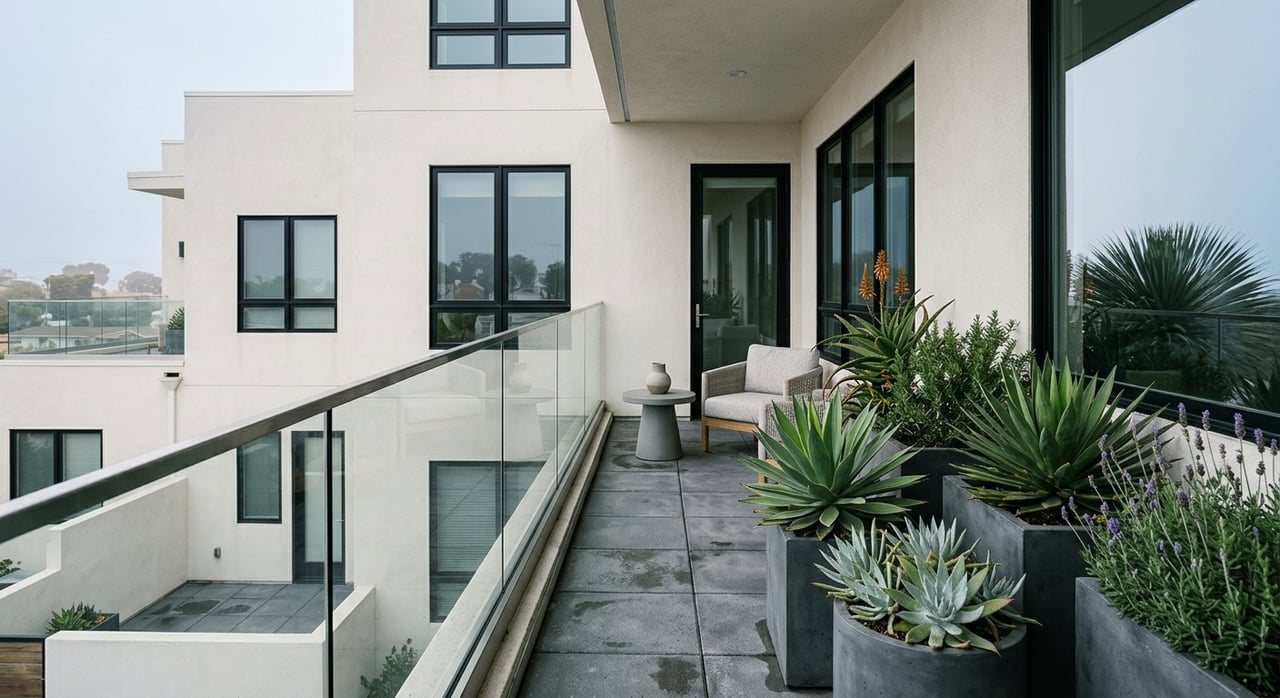
If you spend enough time here, you also start to notice how varied the housing stock is. The official community plan says the area includes both single-family and multiple-family dwellings, with single-family neighborhoods spread widely through the area north of Manchester Avenue and higher-density residential concentrations in Playa del Rey and along key corridors.
Nearly all of the housing stock was built in the post-World War II era. The plan also notes that 73% of residential acreage is designated single-family, while more than 49% of existing dwelling units are in multiple-family designations. That helps explain why you can find a mix of homes, condos, duplexes, and apartments within a relatively compact coastal neighborhood.
There are also smaller pockets with distinct physical character. South of Culver Boulevard and west of Vista Del Mar, the area locally known as The Jungle includes two- and three-story multi-family residences, very narrow streets, and walk streets closed to vehicular use. North of Culver Boulevard and south of Ballona Creek, Del Rey Lagoon and Park is lined with duplexes and two- and three-story residential buildings.
For buyers thinking long term, the bluff setting matters too. The Coastal Bluffs Specific Plan helps regulate height, yards, lot coverage, and other construction factors in order to protect and enhance the coastal environment. That framework plays an important role in how parts of Playa del Rey continue to look and feel over time.
Lifestyle and commute tradeoffs
If you are considering a move here, lifestyle and commute usually come up in the same conversation. Census data for ZIP code 90293 show a mean travel time to work of 29.5 minutes, with 57% of workers driving alone and 34% working from home.
That suggests Playa del Rey still functions as a car-forward neighborhood, even though remote work is a meaningful part of daily life. Public transit, biking, and walking each account for only about 1% of commuting in the same data set.
In practical terms, Playa del Rey can work well for people who want coastal access while staying connected to the Westside and nearby job centers. At the same time, airport noise and traffic are real factors to weigh. The right fit often comes down to how you prioritize beach lifestyle, local atmosphere, and regional convenience.
Why local guidance matters here
Playa del Rey is one of those neighborhoods that looks simple on a map but feels more nuanced in person. Block-by-block differences in views, traffic patterns, housing type, and proximity to the beach can shape your experience in a big way.
If you are buying, that local context helps you compare blufftop homes, condos, duplexes, and multi-family buildings with a clearer lens. If you are selling, it helps position your home around the features buyers already respond to here, such as beach access, village-scale surroundings, and connection to the broader Silicon Beach lifestyle.
Whether you are planning a move, scouting the neighborhood, or simply trying to understand what makes Playa del Rey special, working with a team that knows the Westside can make the process much more focused. If you are ready to explore Playa del Rey real estate with local insight, connect with The Suarez Team.
FAQs
What is a typical beach day in Playa del Rey like?
- A typical Playa del Rey beach day often starts at Dockweiler State Beach, includes time on the Marvin Braude Bike Trail or along Culver Boulevard, and ends with bluff or coastal views near the open-space areas above the beach.
What makes Playa del Rey different from other Westside beach areas?
- Playa del Rey stands out for its walkable coastal setting, village-scale commercial corridor, low-rise housing, scenic bluffs, and a neighborhood feel that remains closely tied to the beach.
What activities are available at Dockweiler State Beach in Playa del Rey?
- Los Angeles County lists swimming, surfing, windsurfing, biking, fishing, scuba or snorkeling, volleyball, picnicking, and evening fire ring use among the main activities at Dockweiler State Beach.
What types of homes are common in Playa del Rey?
- Playa del Rey includes a mix of single-family homes, duplexes, condos, apartments, and other multi-family buildings, with different pockets showing different built forms near the beach, bluffs, and lagoon areas.
What should homebuyers know about living near Playa del Rey beach?
- Homebuyers should understand both the lifestyle benefits and the tradeoffs, including strong beach access, walkability in parts of the neighborhood, car-oriented commuting patterns, and aircraft noise related to nearby LAX.